
I want to feel better
Energy, fatigue and endurance. Feeling a change and measuring performance are different questions.

Curiosity, grounded in evidence
Explore what science says about feeling better, functioning better and aging well. Start with a question, see what happened in humans, and follow the evidence.
Human results · uncertainty in view · original sources within reach
Start with what matters to you
Energy, fatigue and endurance. Feeling a change and measuring performance are different questions.

Strength, mobility, memory and cognition. Explore what people could actually do after an intervention.

Heart and metabolic health. Keep risk factors, lab measures and clinical outcomes in view.

Biological-aging measures, healthspan and lifespan. What can each kind of evidence tell us?
These are questions to explore. A topic appearing here does not mean an intervention has demonstrated a benefit.
From everyday function to frontier questions
A few places to begin exploring exercise, medicines and supplements. This selection is an introduction, not an evidence ranking.

Exercise
Does getting stronger translate into better physical function?
Explore the question
Exercise
Which outcomes are measured when people improve their fitness?
Explore the question
Medicine
How far have human studies taken an intriguing aging hypothesis?
Explore the question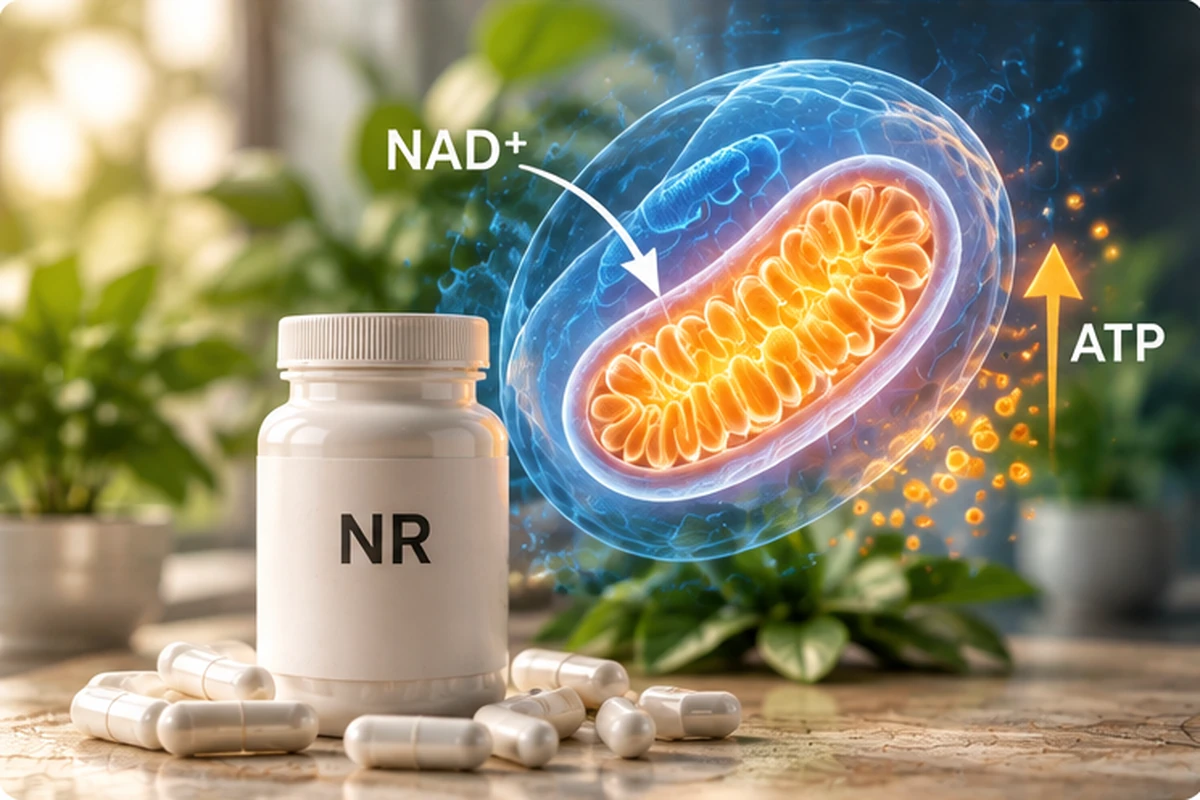
Supplement
What is the gap between changing NAD biology and a meaningful benefit?
Explore the questionFollow the science
Explore ongoing human trials, research activity and the questions that could move healthy-aging science forward. Activity and evidence of benefit are separate signals.
Research briefs
Recent findings, their evidence stage, and what remains uncertain.
Rapamycin & longevity · Human observational evidence
An observational analysis of 11,474 kidney transplant recipients found similar adjusted median survival ages whether or not they were prescribed an mTOR inhibitor.
Source publication: Nov 2026
Read the briefMicrobiome · mixed evidence
Researchers linked Neisseria flavescens to decelerated aging signatures in humans, then reported geroprotective effects in worms and mice.
Source publication: Sep 2026
Read the briefCellular senescence · mixed evidence
RamanOmics combines label-free chemical imaging with spatial and single-cell transcriptomics to identify biochemical signatures of senescence.
Source publication: Sep 2026
Read the briefGo as deep as you like
The reader page explains the question, the human results and the Reality Check. Its Evidence Profile lets you inspect populations, effect estimates, uncertainty and original sources.
Both follow the same evidence. A strength gain, a change in a blood test and a longer life are different findings.
Try it with resistance training
The research behind the experience
Live evidence database · updated 2 October 2026. Counts are calculated directly from AgeBeacon's evidence tables. Direct and indirect longevity relevance is kept separate from unrelated disease-specific research. Study, publication, preclinical and outcome counts can overlap and should not be added together.
Join the conversation
AgeBeacon is growing into a community for people who share this fascination and want to explore new research with both optimism and care. Join the updates list and tell us what you’d like to discuss.
Suggest a topic or question
Follow the questions that matter to you, from everyday function to the frontiers of aging science.